Students Den

UX Case Study

2024

Name

Initial Story

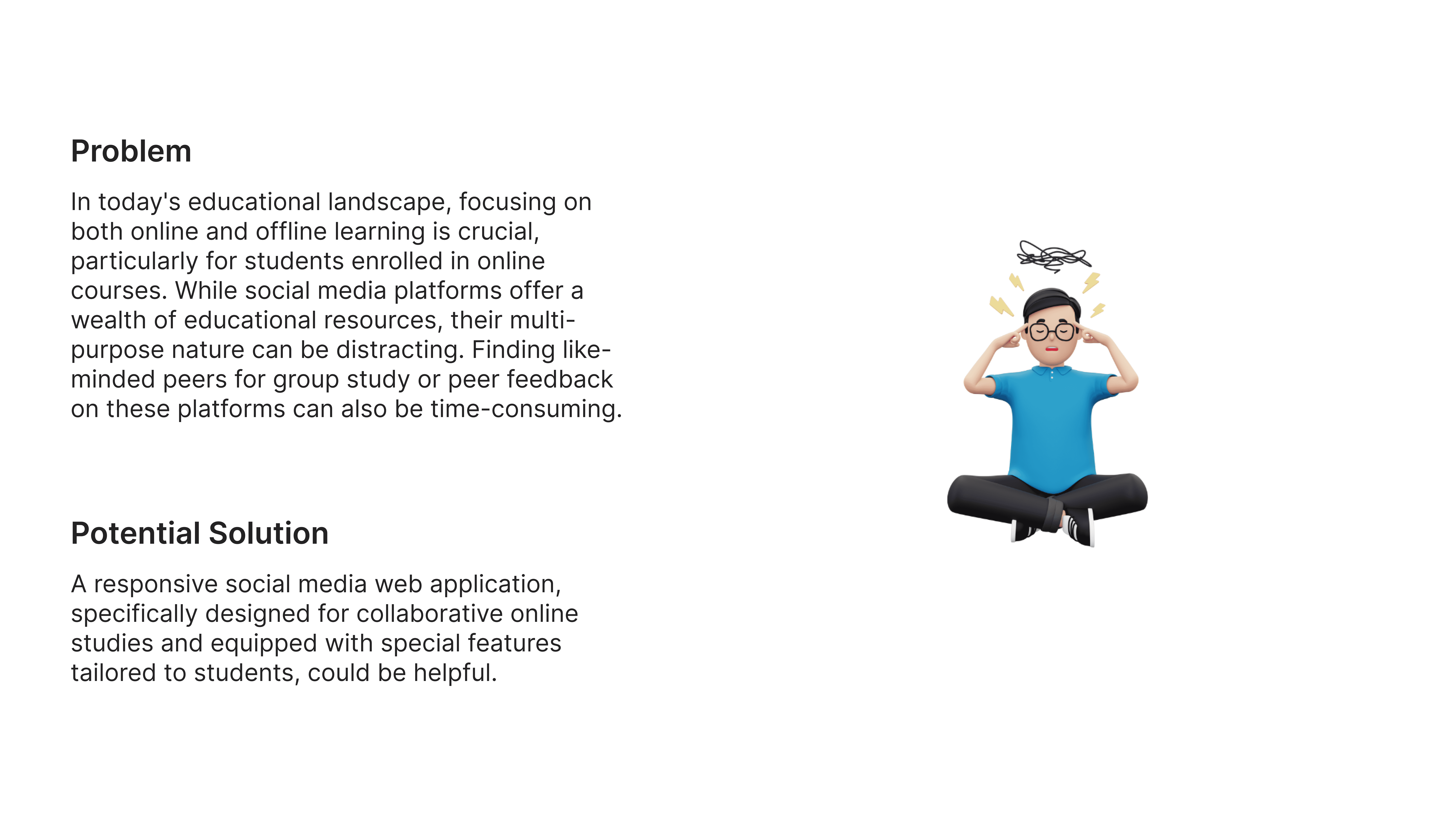
In today's world, social media platforms are ubiquitous, offering both valuable learning opportunities and connections. However, the sheer volume of information can be overwhelming, hindering focus and attention spans. This is especially true for students juggling academic pursuits with the allure of social media distractions.


Recognizing this challenge, I, as a UX & UI designer, envision a student-centered social media platform. This platform would empower students to focus on their studies by providing a distraction-free space for :


  • Finding high-quality educational materials


  • Connecting with like-minded peers


  • Sharing and receiving constructive feedback on assignments

Name

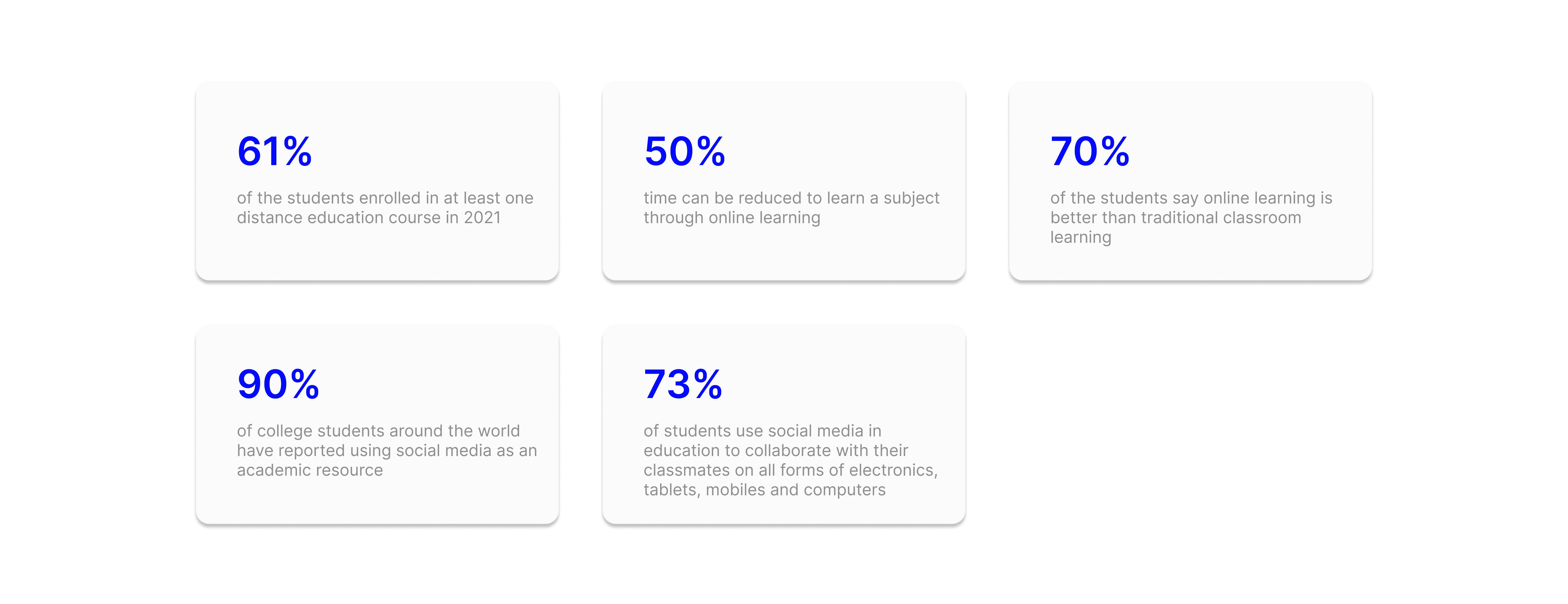
Online Learning Popularity & Efficiency

Online learning platforms are web-based portals that provide students with a one-stop shop for educational resources. These platforms offer a comprehensive suite of features, including lectures, downloadable materials, and interactive forums for student engagement.


Notably, nearly 8.5 million U.S. students leverage online classes at public universities, highlighting the growing popularity of this educational approach. Moreover, online schools tend to attract a more racially diverse student body compared to traditional institutions.
Name

Problem Analysis

Name

My Research On Potential Users

To understand the challenges of online learning, I conducted video interviews with 3 individuals from diverse age groups (25-55) with a prior online learning experience. Here's a summary of their pain points:


  • Lack of motivation and self-discipline: Online learning requires a lot of self-motivation to stay on track and manage time effectively


  • Limited interaction: One of the biggest drawbacks of online learning is the lack of face-to-face interaction with instructors and classmates.


  • Technical difficulties: Technical problems like unreliable internet connections, software glitches, or malfunctioning equipment can disrupt the learning process and cause frustration


  • Information overload: Online courses can sometimes overwhelm students with a large amount of text-based content, videos, and assignments. This can make it difficult to absorb the information and stay focused


  • Lack of engagement: Poorly designed online courses that rely solely on lectures and readings can be boring and ineffective


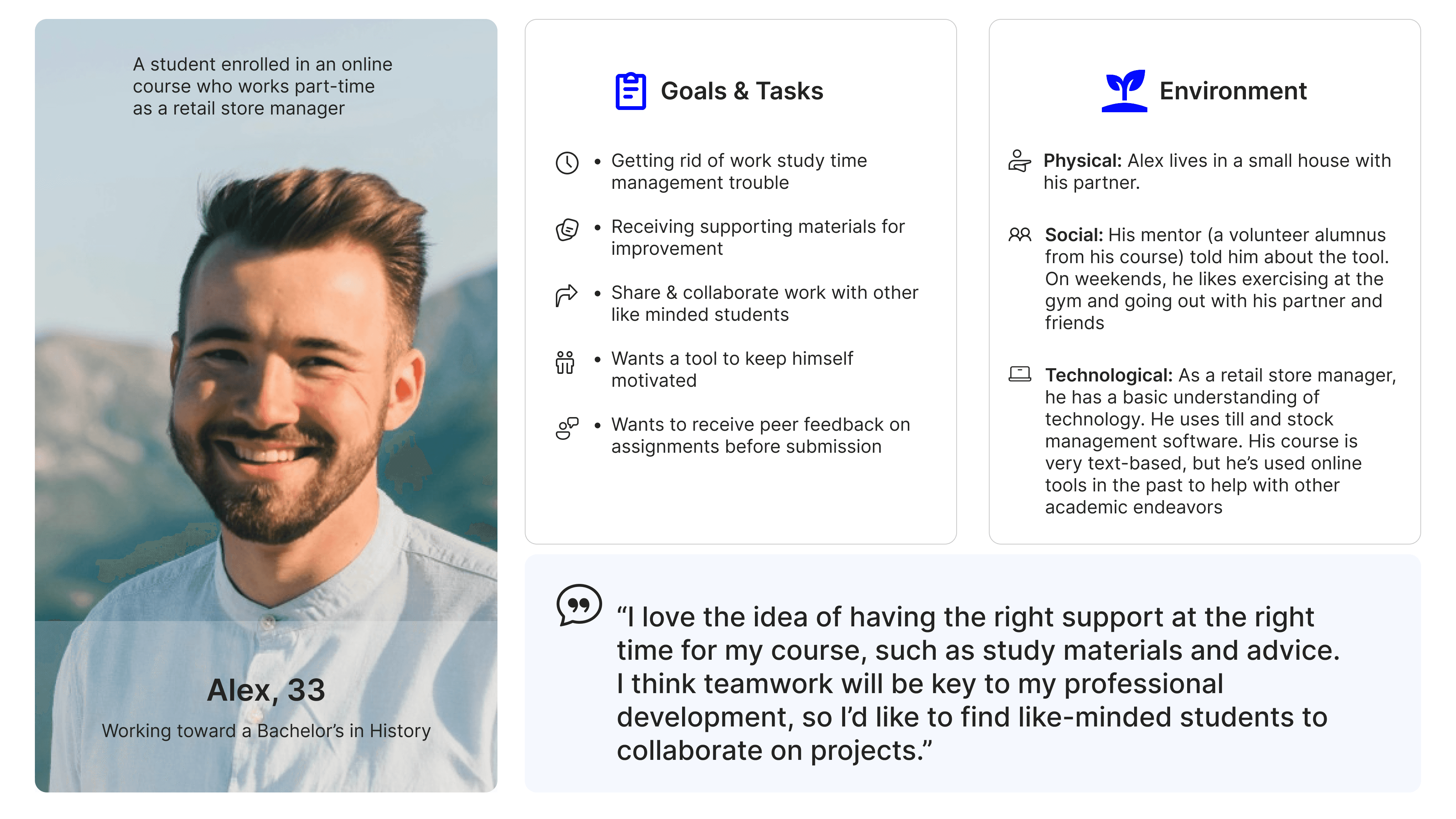
To systematically organize my user research, I developed a user persona that encapsulates a specific segment of our target audience. This persona is designed to embody the collective characteristics and needs of this subgroup, thereby informing our approach to addressing their unique challenges.

To understand the challenges of online learning, I conducted video interviews with 3 individuals from diverse age groups (25-60) with prior online learning experience. Here's a summary of their insights:


  • Lack of motivation and self-discipline: Online learning requires a lot of self-motivation to stay on track and manage your time effectively. Without the structure of a traditional classroom setting, it's easy to procrastinate or get sidetracked by distractions.


  • Limited interaction: One of the biggest drawbacks of online learning is the lack of face-to-face interaction with instructors and classmates. This can make it difficult to get help with challenging concepts, feel a sense of community, and stay engaged in the material.


  • Technical difficulties: Technical problems like unreliable internet connections, software glitches, or malfunctioning equipment can disrupt the learning process and cause frustration


  • Information overload: Online courses can sometimes overwhelm students with a large amount of text-based content, videos, and assignments. This can make it difficult to absorb the information and stay focused


  • Lack of engagement: Poorly designed online courses that rely solely on lectures and readings can be boring and ineffective. Students may struggle to stay engaged with the material without interactive elements, discussions, or activities.


To systematically organize my user research, I developed a user persona that encapsulates a specific segment of our target audience. This persona is designed to embody the collective characteristics and needs of this subgroup, thereby informing our approach to addressing their unique challenges.

To understand the challenges of online learning, I conducted video interviews with 3 individuals from diverse age groups (25-60) with prior online learning experience. Here's a summary of their insights:


  • Lack of motivation and self-discipline: Online learning requires a lot of self-motivation to stay on track and manage your time effectively. Without the structure of a traditional classroom setting, it's easy to procrastinate or get sidetracked by distractions.


  • Limited interaction: One of the biggest drawbacks of online learning is the lack of face-to-face interaction with instructors and classmates. This can make it difficult to get help with challenging concepts, feel a sense of community, and stay engaged in the material.


  • Technical difficulties: Technical problems like unreliable internet connections, software glitches, or malfunctioning equipment can disrupt the learning process and cause frustration


  • Information overload: Online courses can sometimes overwhelm students with a large amount of text-based content, videos, and assignments. This can make it difficult to absorb the information and stay focused


  • Lack of engagement: Poorly designed online courses that rely solely on lectures and readings can be boring and ineffective. Students may struggle to stay engaged with the material without interactive elements, discussions, or activities.


To systematically organize my user research, I developed a user persona that encapsulates a specific segment of our target audience. This persona is designed to embody the collective characteristics and needs of this subgroup, thereby informing our approach to addressing their unique challenges.

Name

See the full User Research here

Device Selection

User research indicated a strong preference for accessing Students Den on mobile devices for on-the-go use, such as during commutes on buses or cars.

Additionally, users expressed a desire for seamless use of tablets and laptops in settings like home and classrooms.


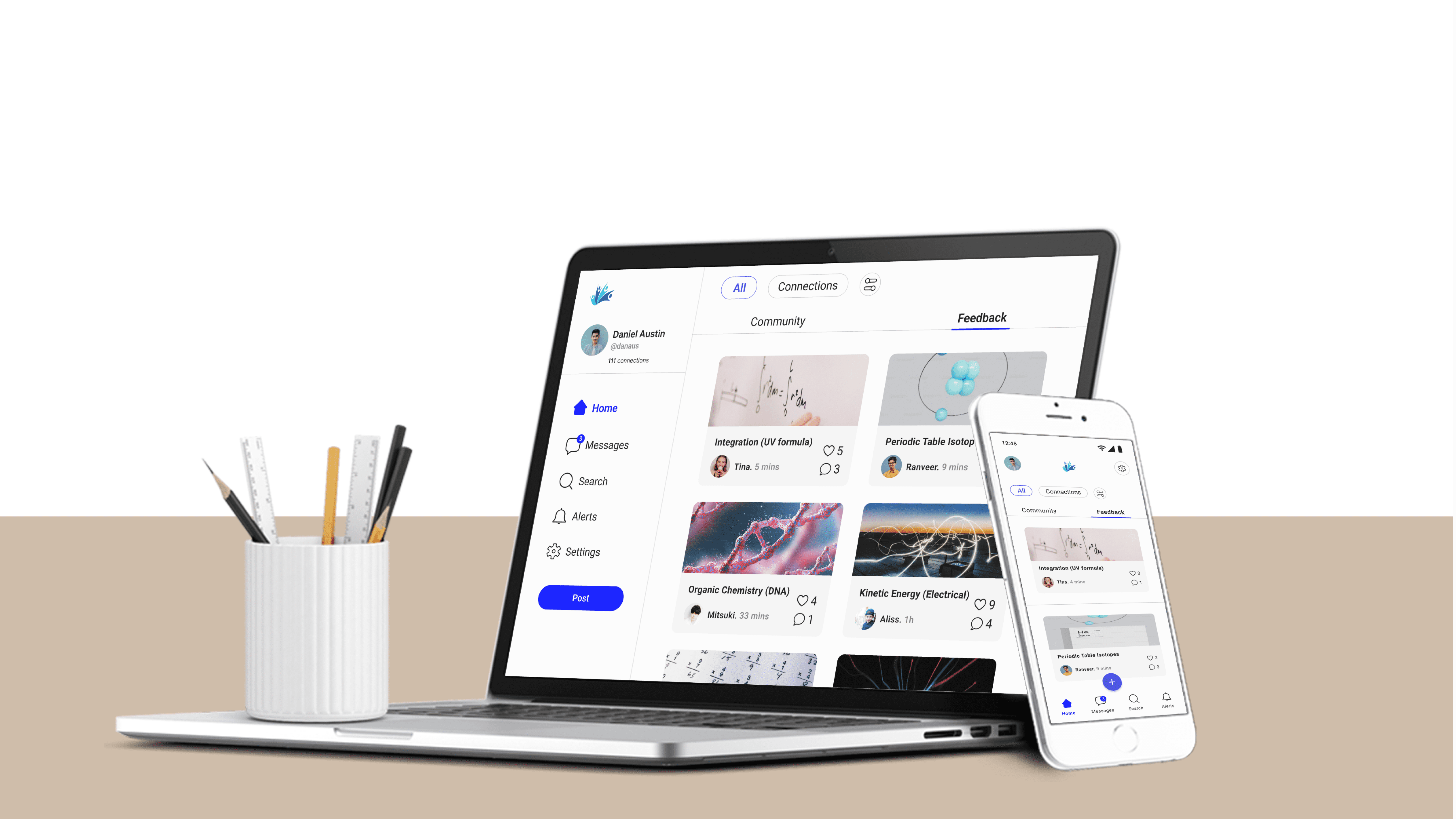
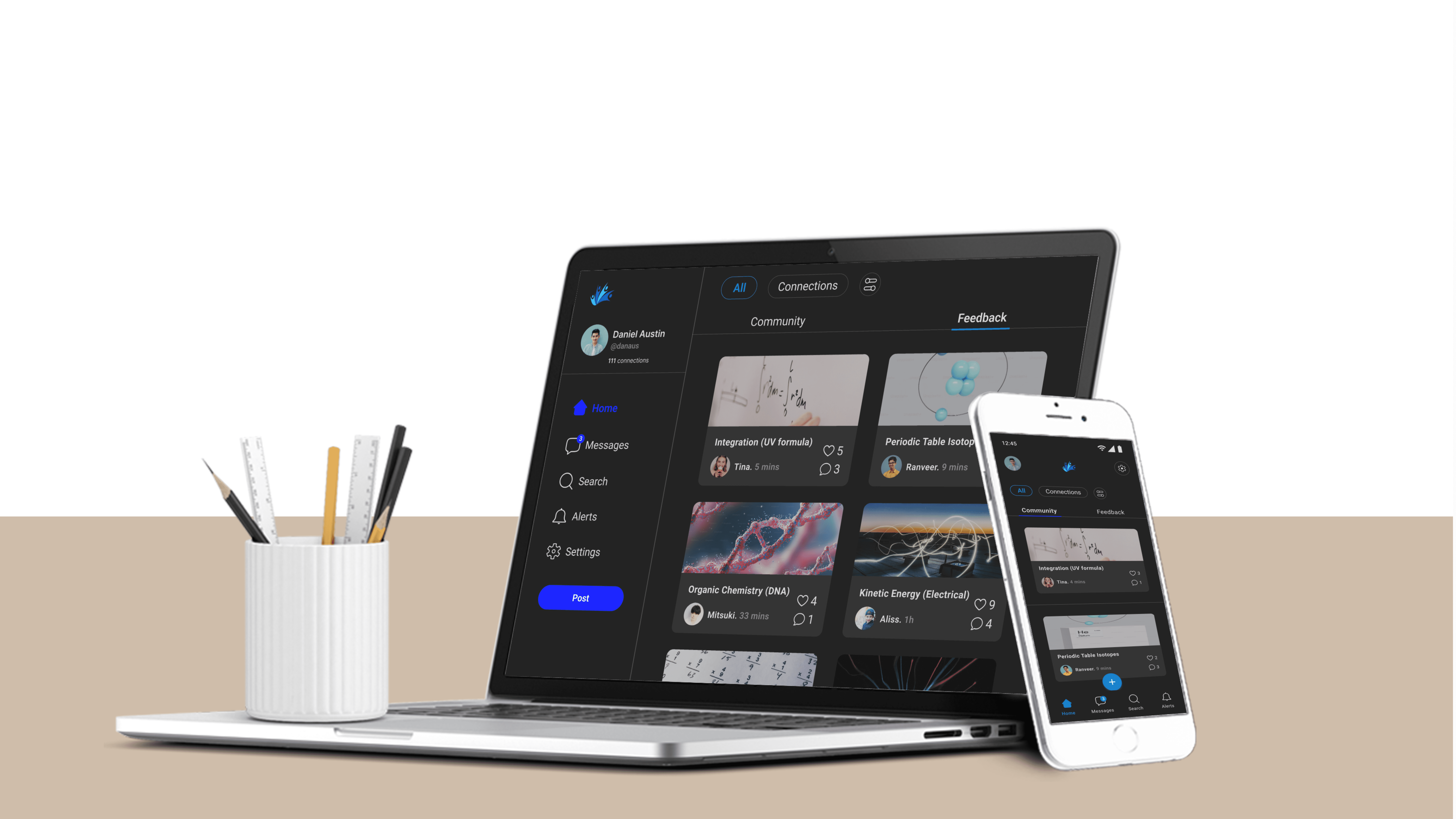
This insight led to the development of Students Den as a responsive web application, ensuring optimal functionality across various devices.

User research indicated a strong preference for accessing Students Den on mobile devices for on-the-go use, such as during commutes on buses or cars.

Additionally, users expressed a desire for seamless use of tablets and laptops in settings like home and classrooms.


This insight led to the development of Students Den as a responsive web application, ensuring optimal functionality across various devices.

User research indicated a strong preference for accessing Students Den on mobile devices for on-the-go use, such as during commutes on buses or cars.

Additionally, users expressed a desire for seamless use of tablets and laptops in settings like home and classrooms.


This insight led to the development of Students Den as a responsive web application, ensuring optimal functionality across various devices.

User Flow

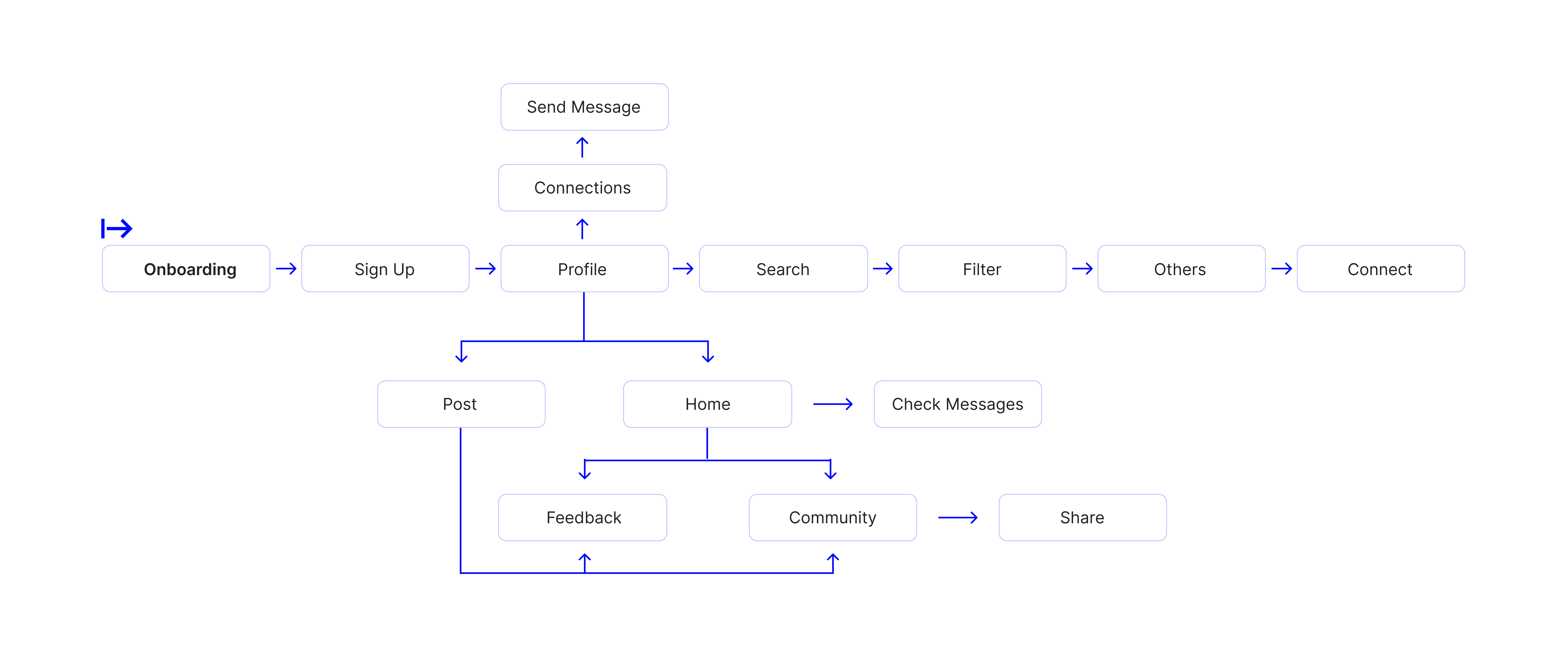
Leveraging insights from user research, I prioritized user experience by crafting a comprehensive user flow.


This user flow aims to facilitate intuitive navigation and streamline task completion within the application.

Leveraging insights from user research, I prioritized user experience by crafting a comprehensive user flow.


This user flow aims to facilitate intuitive navigation and streamline task completion within the application.

Leveraging insights from user research, I prioritized user experience by crafting a comprehensive user flow.


This user flow aims to facilitate intuitive navigation and streamline task completion within the application.

Name

Creating Wireframes & Prototypes

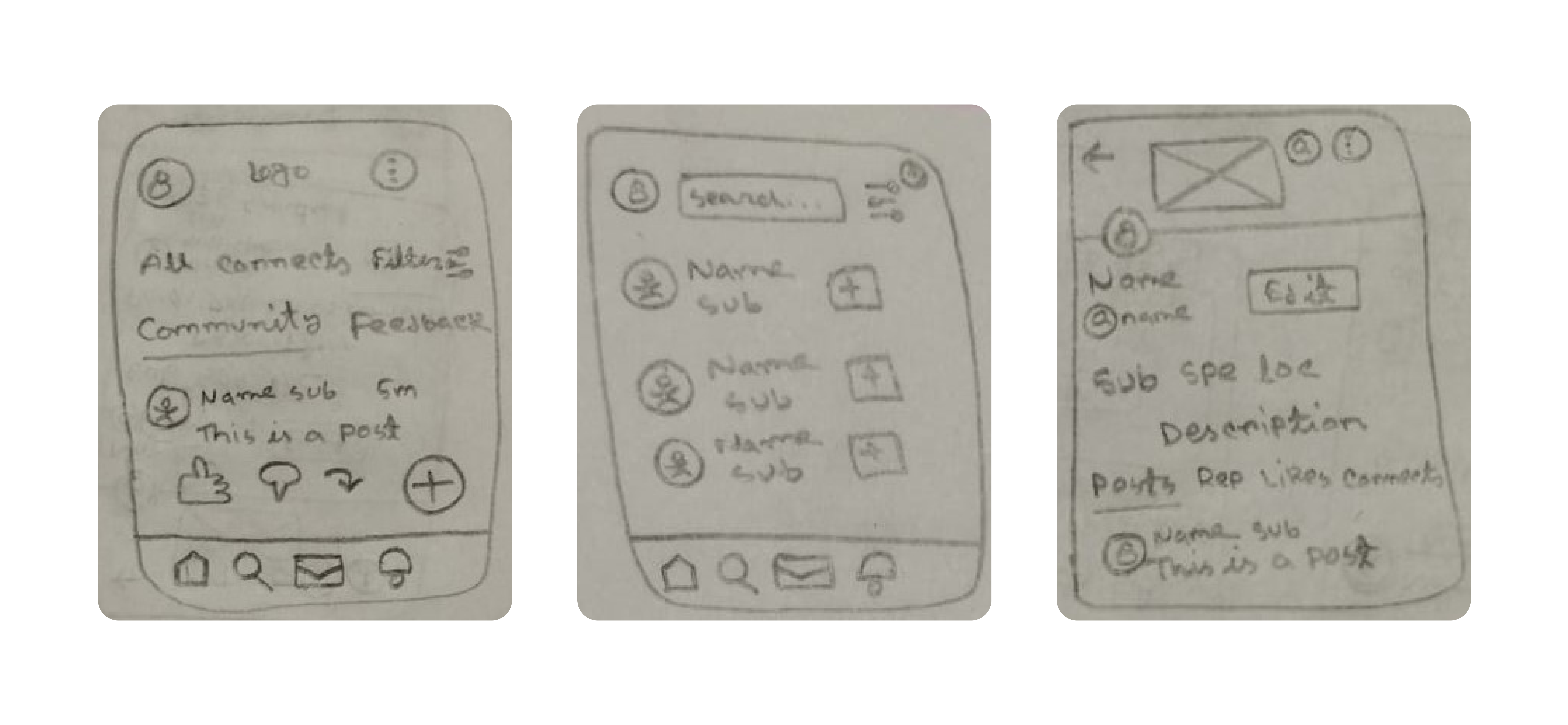
Following the completion of the Information Architecture, I embarked on the design process by crafting initial low-fidelity wireframes. These wireframes served as the foundation for the project, providing a clear visual representation of the interface's structure and content hierarchy.

Following the completion of the Information Architecture, I embarked on the design process by crafting initial low-fidelity wireframes. These wireframes served as the foundation for the project, providing a clear visual representation of the interface's structure and content hierarchy.


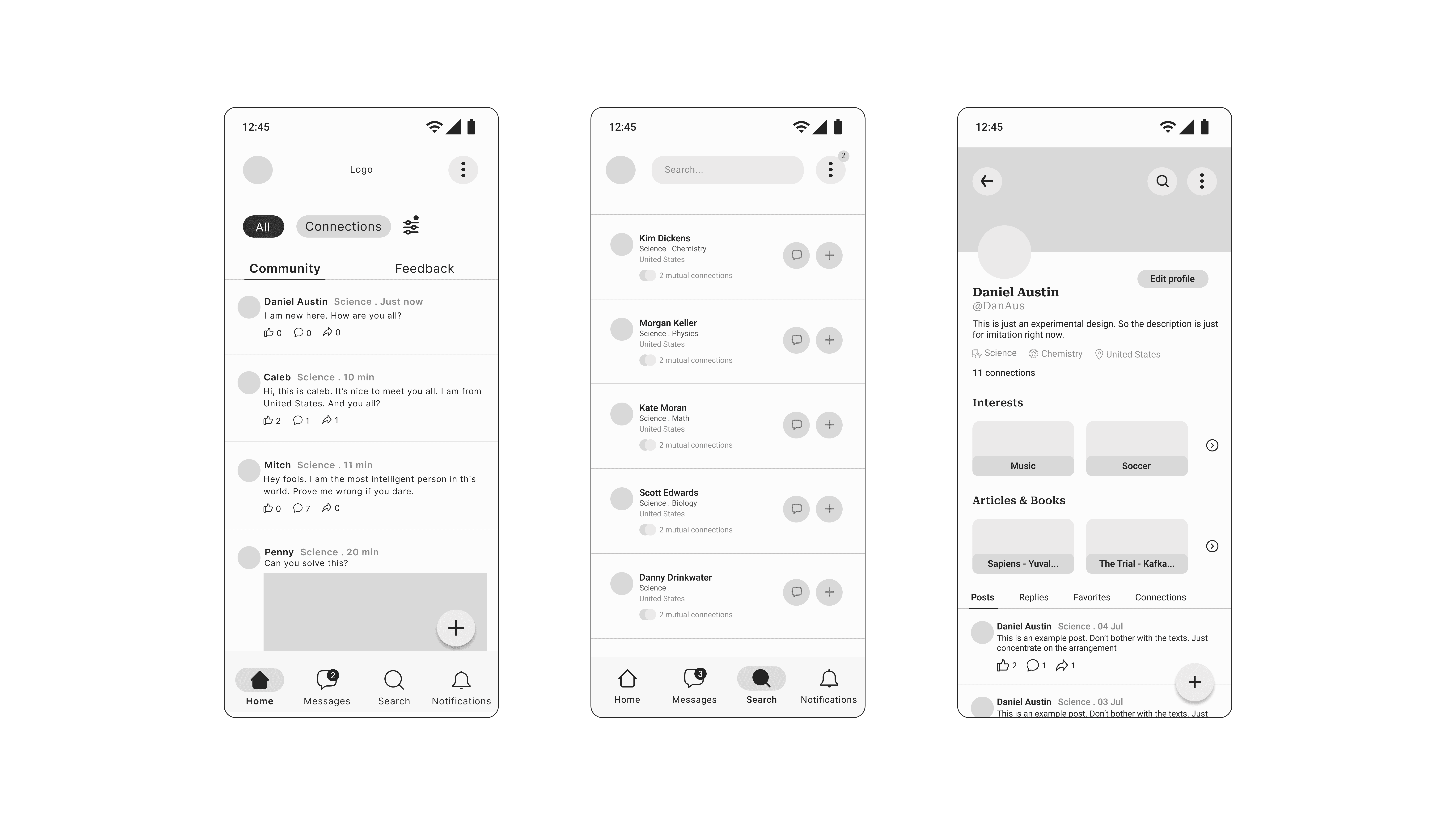
Subsequently, the design evolved into interactive mid-fidelity prototypes, allowing for user testing and refinement.


To gather valuable user feedback and identify areas for improvement, I conducted usability testing with 3 participants utilizing the mid-fidelity interactive prototypes. This feedback will be instrumental in further refining the design.

Following the completion of the Information Architecture, I embarked on the design process by crafting initial low-fidelity wireframes. These wireframes served as the foundation for the project, providing a clear visual representation of the interface's structure and content hierarchy.


Subsequently, the design evolved into interactive mid-fidelity prototypes, allowing for user testing and refinement.


To gather valuable user feedback and identify areas for improvement, I conducted usability testing with 3 participants utilizing the mid-fidelity interactive prototypes. This feedback will be instrumental in further refining the design.

Name

Subsequently, the design evolved into interactive mid-fidelity prototypes, allowing for user testing and refinement.


To gather valuable user feedback and identify areas for improvement, I conducted usability testing with 3 participants utilizing the mid-fidelity interactive prototypes. This feedback will be instrumental in further refining the design.

Following the completion of the Information Architecture, I embarked on the design process by crafting initial low-fidelity wireframes. These wireframes served as the foundation for the project, providing a clear visual representation of the interface's structure and content hierarchy.


Subsequently, the design evolved into interactive mid-fidelity prototypes, allowing for user testing and refinement.


To gather valuable user feedback and identify areas for improvement, I conducted usability testing with 3 participants utilizing the mid-fidelity interactive prototypes. This feedback will be instrumental in further refining the design.

Following the completion of the Information Architecture, I embarked on the design process by crafting initial low-fidelity wireframes. These wireframes served as the foundation for the project, providing a clear visual representation of the interface's structure and content hierarchy.


Subsequently, the design evolved into interactive mid-fidelity prototypes, allowing for user testing and refinement.


To gather valuable user feedback and identify areas for improvement, I conducted usability testing with 3 participants utilizing the mid-fidelity interactive prototypes. This feedback will be instrumental in further refining the design.

Name

See the Usability Testing here

Special Features
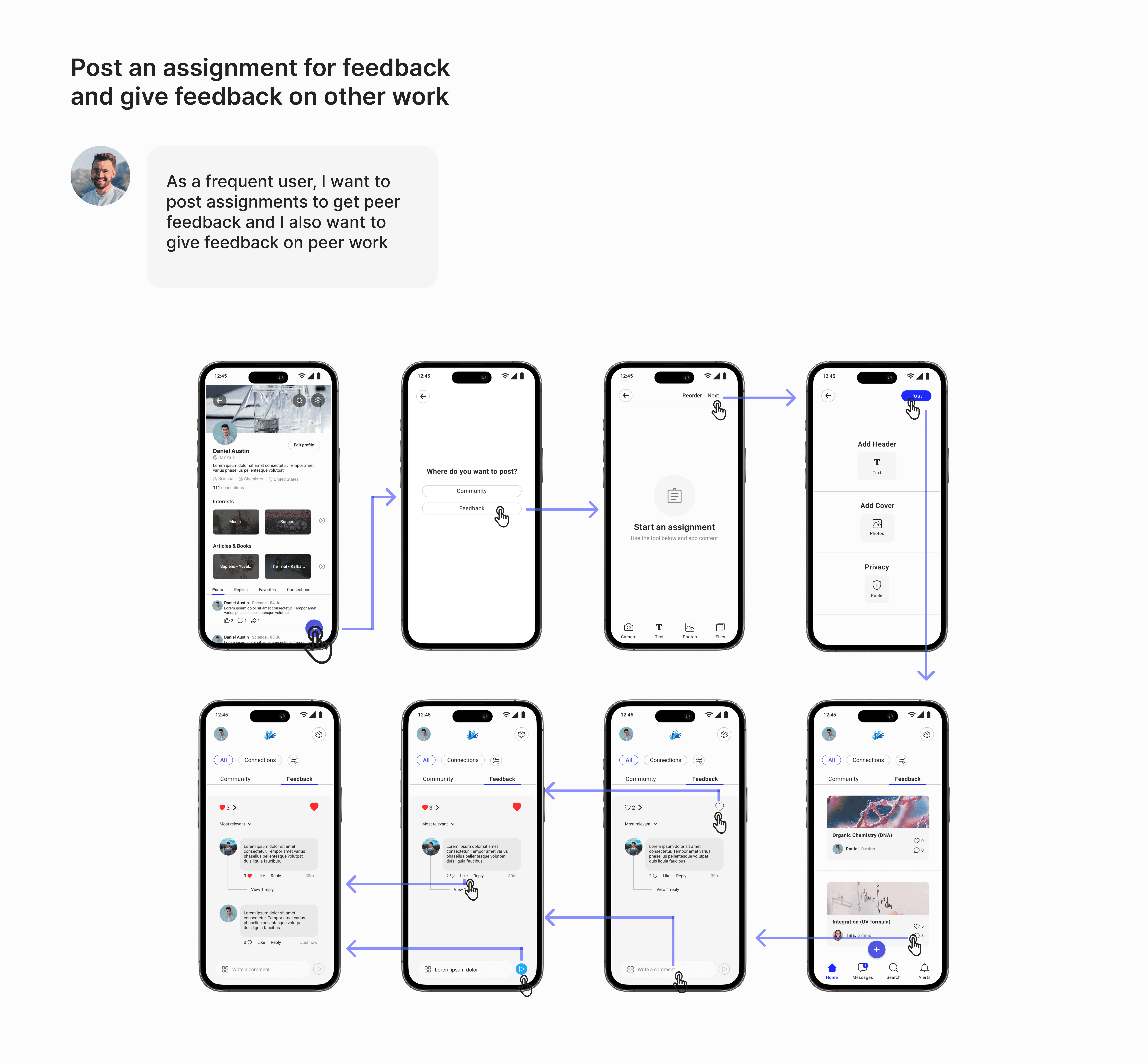
Students Den fosters collaboration by enabling you to:


Post assignments for peer feedback: Get valuable insights from classmates on your work.


Explore others' assignments: Discover diverse

approaches and learning styles.


Provide feedback on classmates' work: Contribute to a supportive learning community.

Students Den fosters collaboration by enabling you to:


Post assignments for peer feedback: Get valuable insights from classmates on your work.


Explore others' assignments: Discover diverse

approaches and learning styles.


Provide feedback on classmates' work: Contribute to a supportive learning community.

Students Den fosters collaboration by enabling you to:


Post assignments for peer feedback: Get valuable insights from classmates on your work.


Explore others' assignments: Discover diverse

approaches and learning styles.


Provide feedback on classmates' work: Contribute to a supportive learning community.

Name
Name

Brand Identity

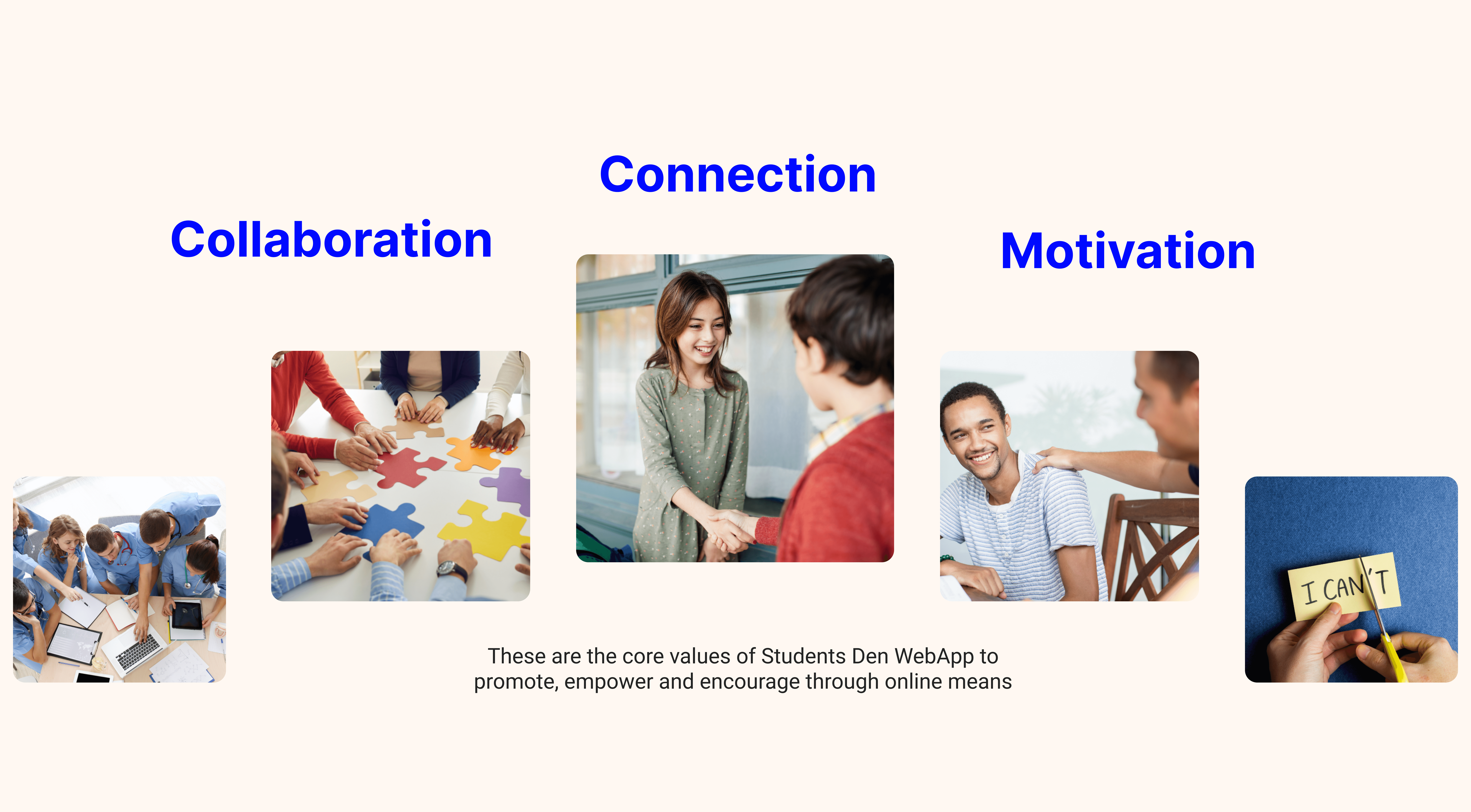
To shape the personality of the web app, I crafted a visual identity that captured the spirit of the Students Den.
Name

Design System

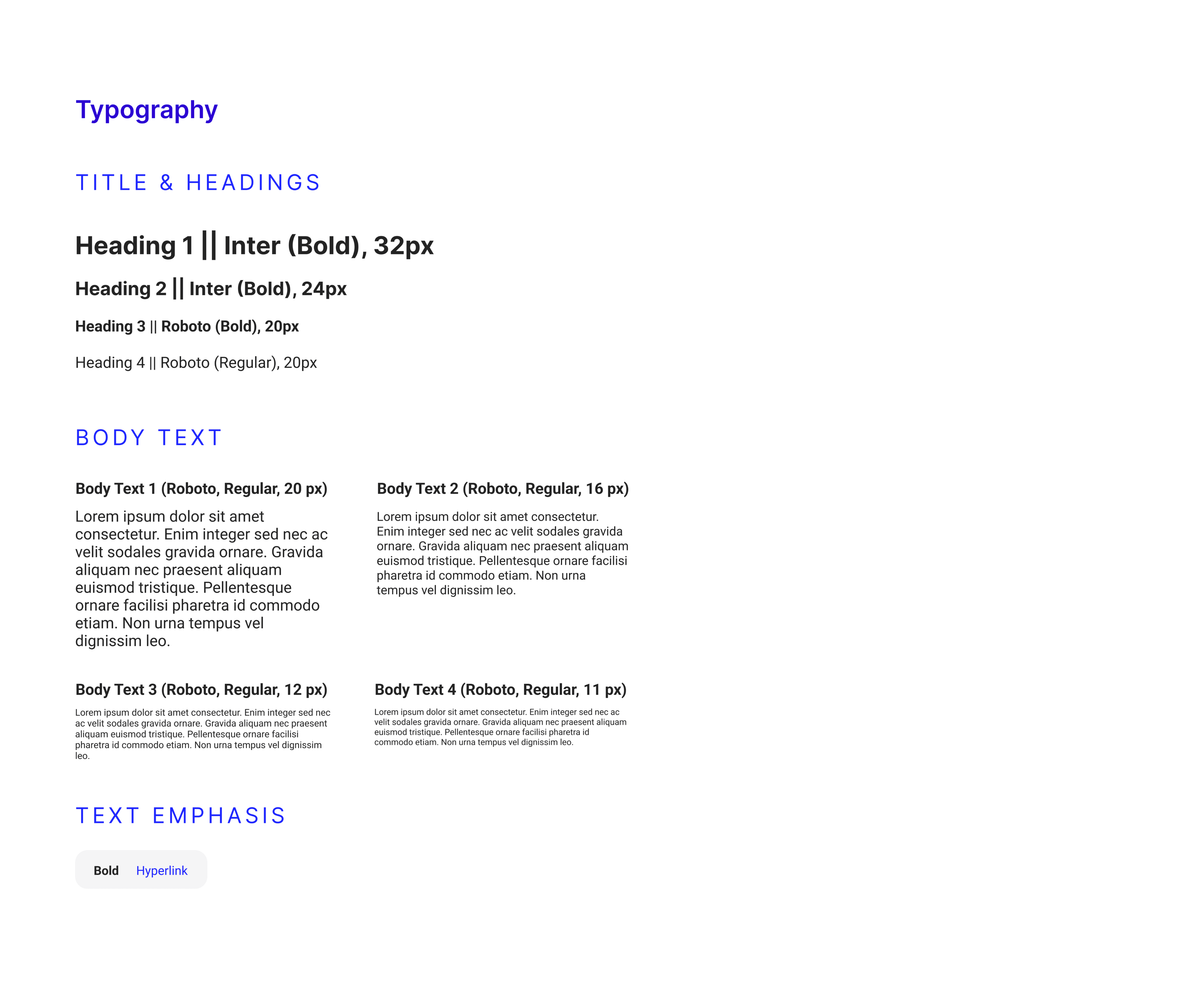
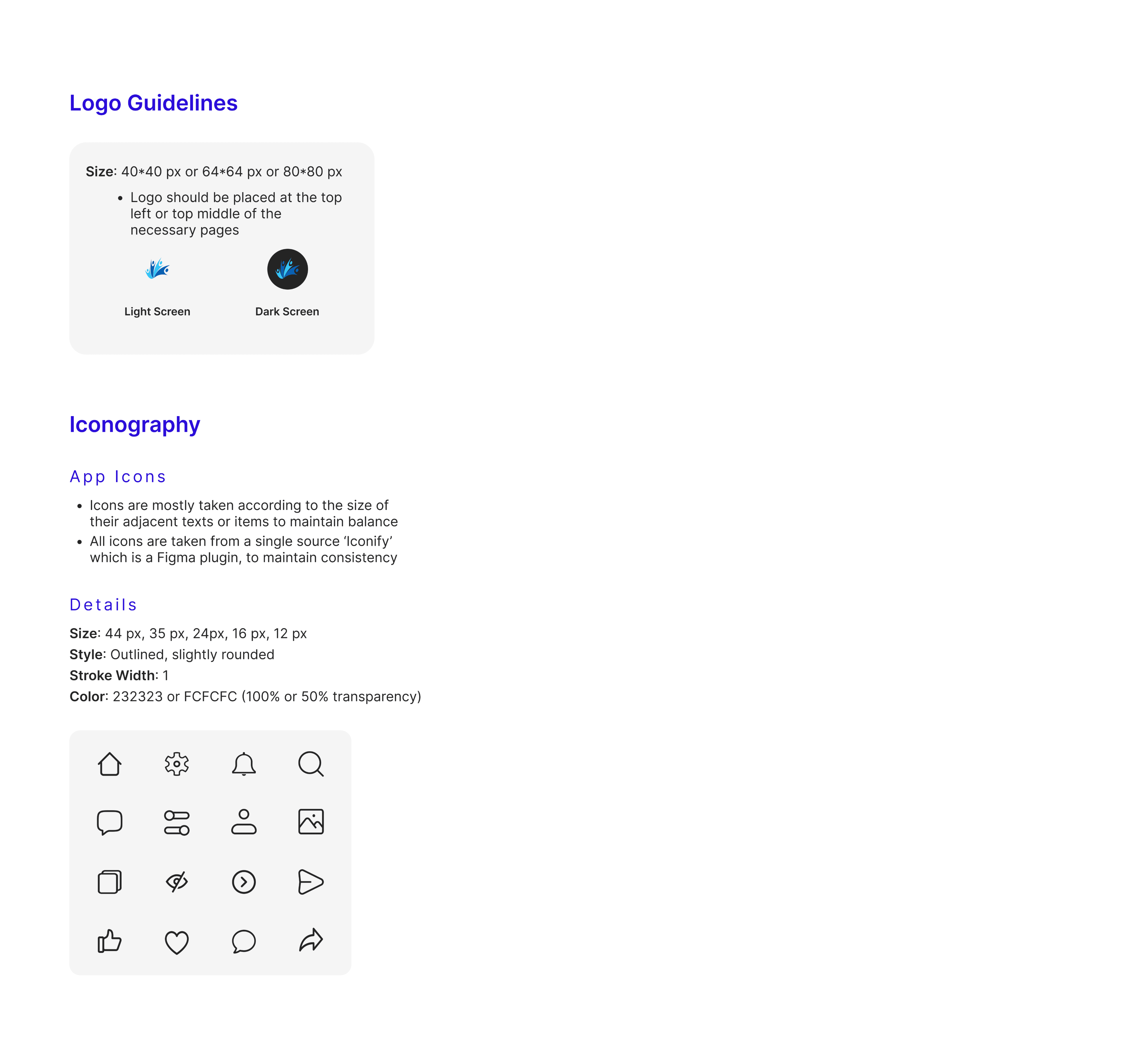
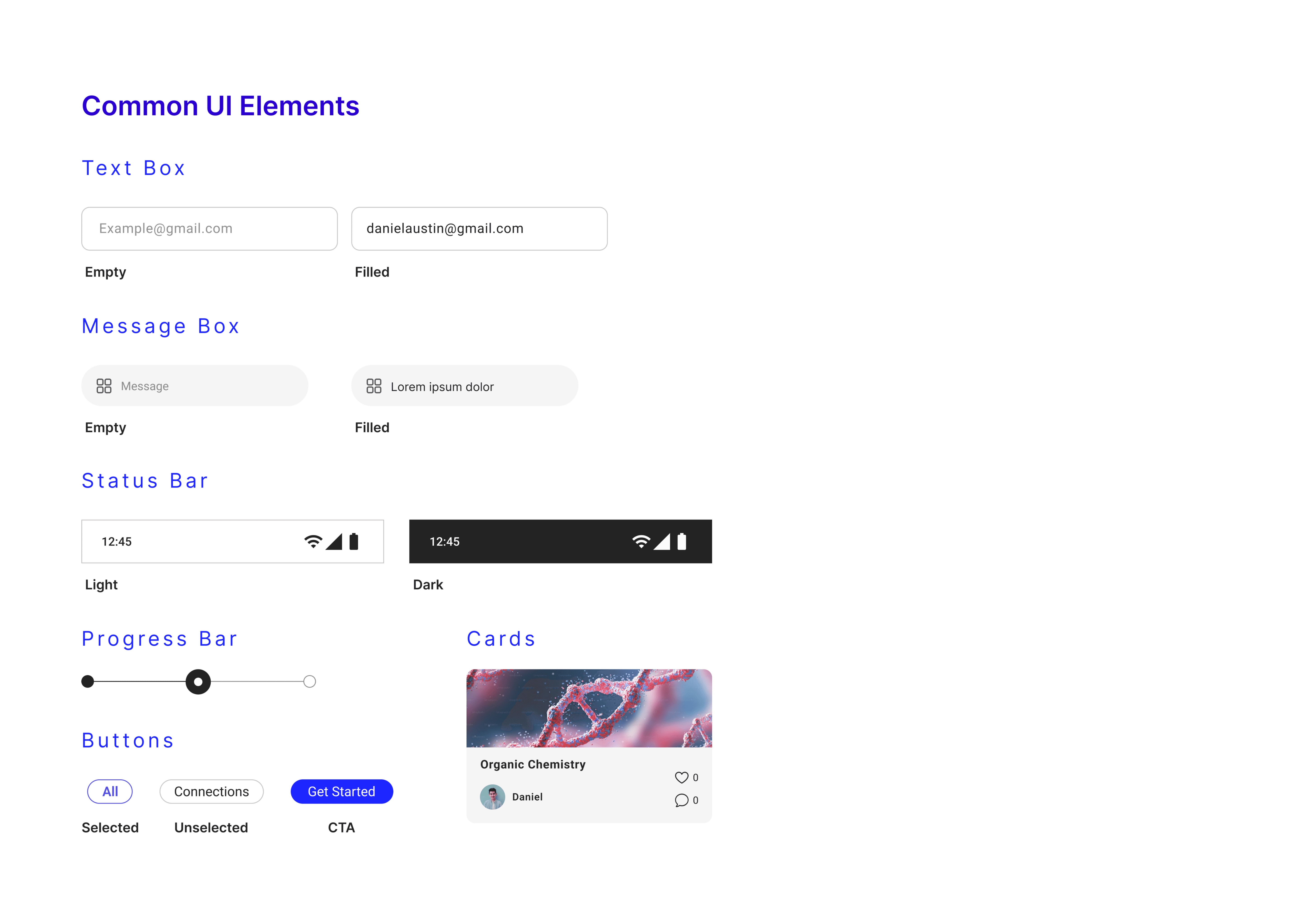
To guarantee a consistent, user-friendly experience across the Students Den, I built a design system with core elements and guidelines
Name
Name
Name
Name
Name

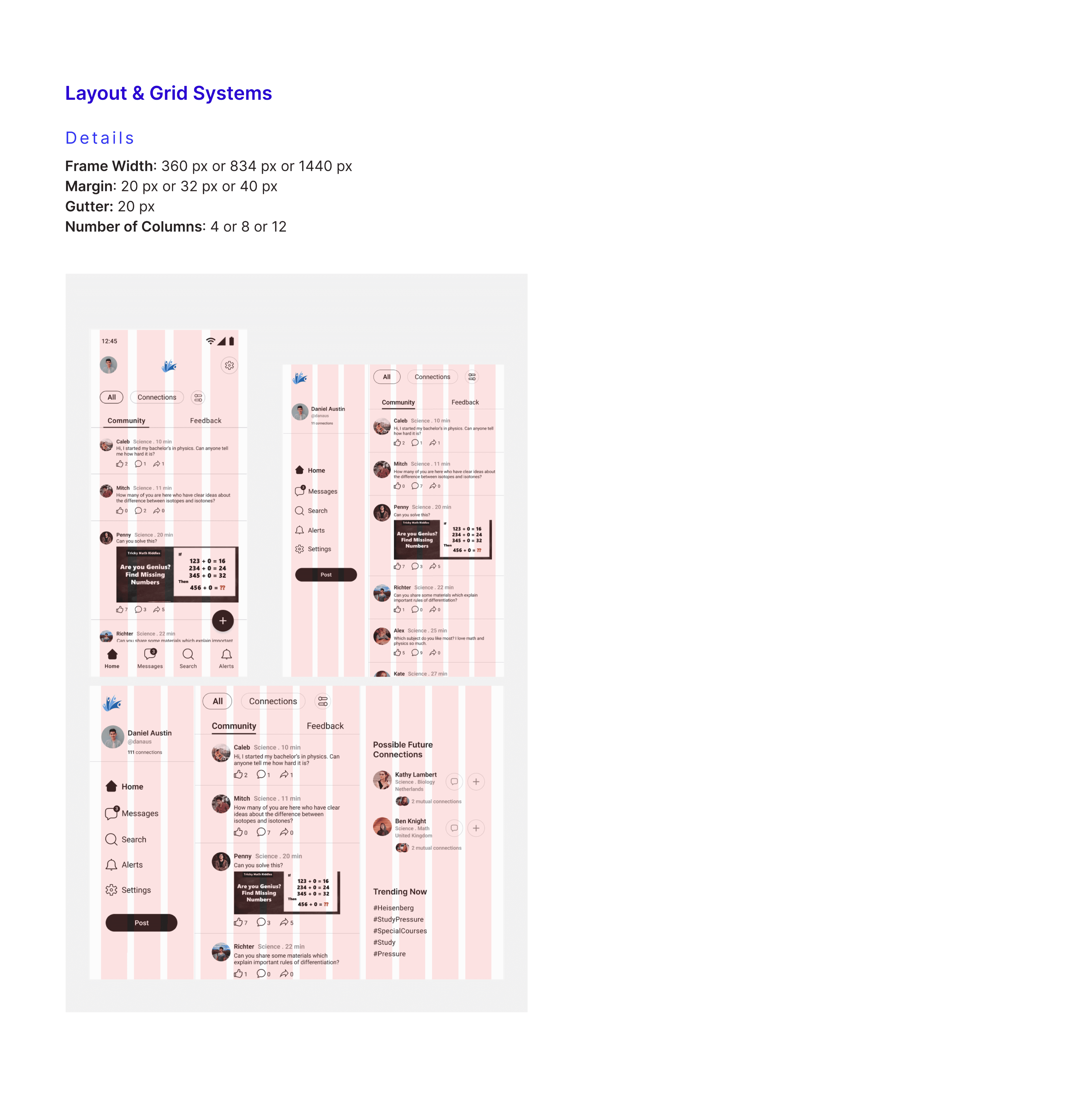
Responsive Design

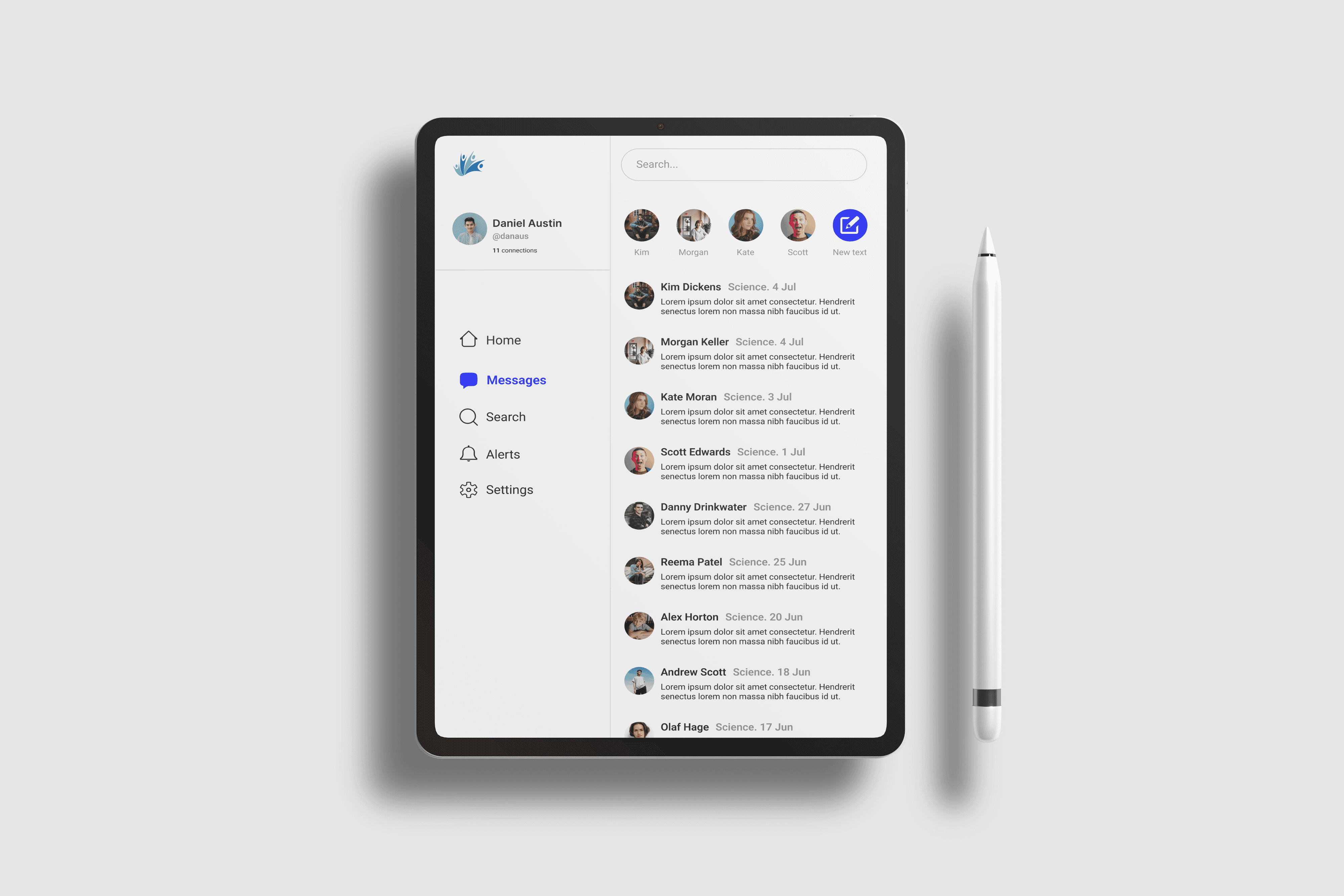
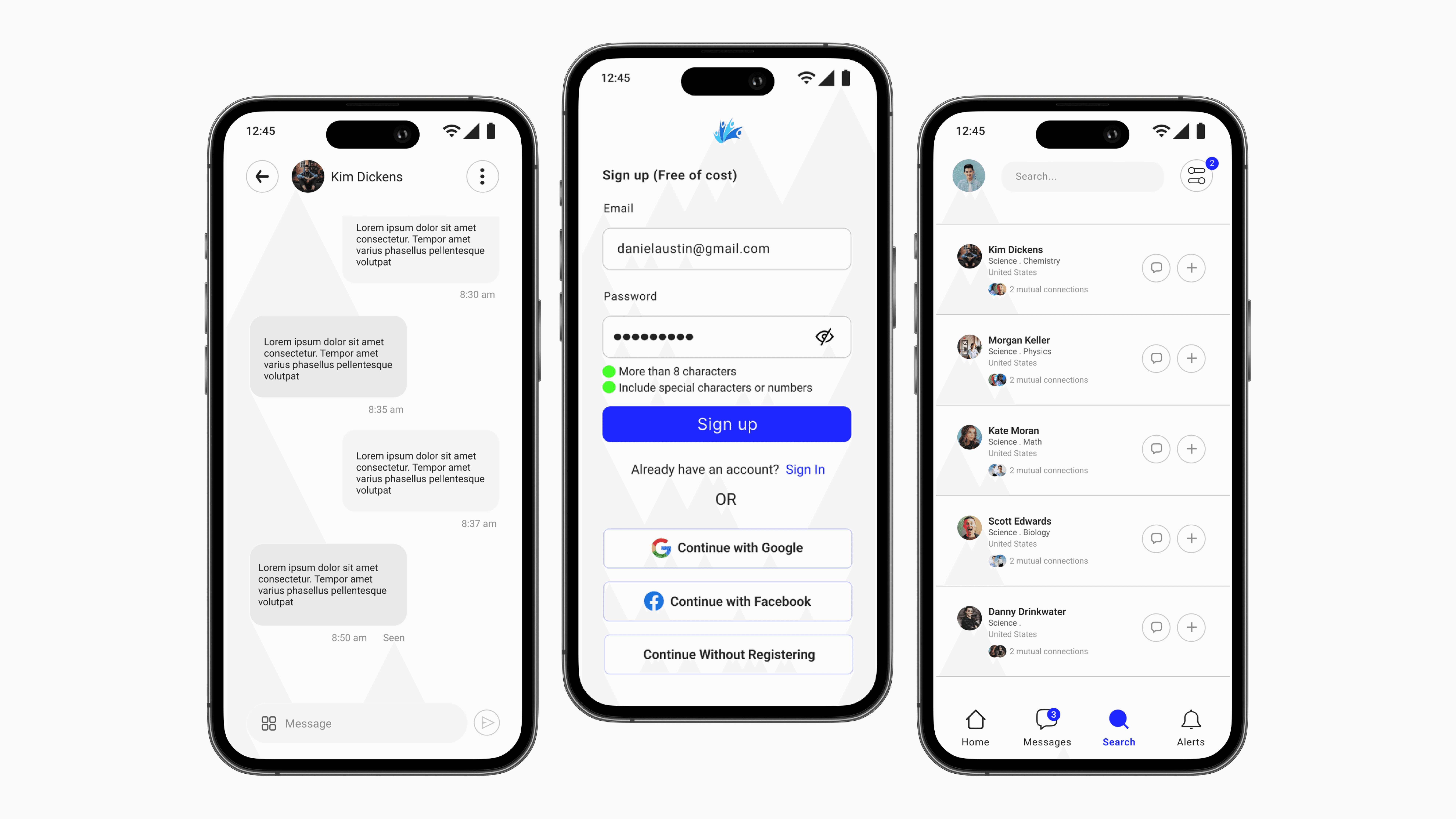
I conducted thorough responsive design testing on the Students Den across a variety of devices, including mobiles, tablets, and laptops, to ensure optimal user experience on all screen sizes.

Name
Name
Name
Name
Name

Final Outcome

After finalizing the high-fidelity prototypes, I conducted a final usability test with the same participants. This resulted in a significant 11.67% improvement in their average satisfaction level, highlighting the value of the design iterations.


To ensure a consistent evaluation process, mid-fidelity prototypes were also used in this final test, mirroring the approach from the initial usability testing.

Email: omyonahian@gmail.com

Email: omyonahian@gmail.com

Email: omyonahian@gmail.com